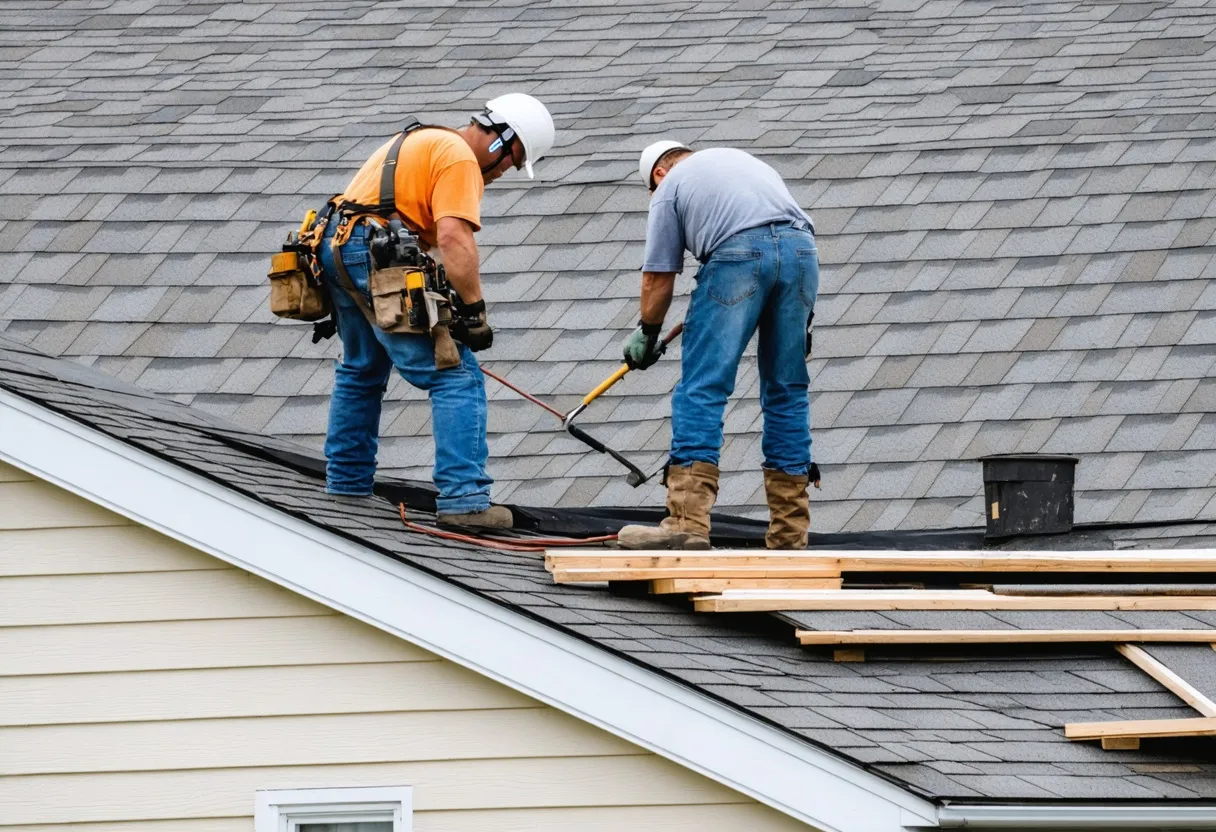
A leaking roof rarely waits for a convenient time to show up. In Spokane, freeze-thaw cycles, heavy winter snow load, and sudden summer windstorms all take a toll on shingles, flashing, and flat roof membranes -- and a small leak ignored through one season can turn into rotted decking and a full replacement by the next. Roofing Spokane Pros repairs roof leaks, storm damage, and worn roofing systems across the Spokane area, backed by manufacturer credentials from GAF, Owens Corning, and Duro-Last, published cost ranges instead of vague "call for a quote" answers, and a dedicated process for homeowners navigating an insurance claim after a storm.
This page covers what our roof repair service actually includes, how the repair process works from first call to final walkthrough, what drives cost up or down, the materials we install and why the brand behind them matters, and the questions homeowners ask most before hiring a roofer.
Roof Repair and Leak Repair in Spokane
Most repair calls fall into a few categories: active leaks during or after a storm, slow leaks that show up as a stain on a ceiling weeks after the water intrusion started, and damage that's visible from the ground -- missing shingles, a sagging section, or granules collecting in the gutters. We diagnose and fix all three.
A proper leak repair starts with finding the actual entry point, which is often several feet away from where the water shows up inside the house -- water travels along decking and framing before it drips. Common repair points include:
- Cracked, curled, or wind-lifted shingles
- Failed flashing around chimneys, skylights, and vent pipes
- Deteriorated pipe boots (the rubber collar around plumbing vents is usually the first thing to fail on a roof)
- Ice-dam damage along eaves after a hard freeze-thaw cycle
- Punctures or seam separation on flat and low-slope membranes
- Damaged or clogged valleys where two roof planes meet
If you have an active leak right now, don't wait for a scheduled appointment -- our emergency roof repair service is available for water actively entering the home, storm damage that's left a roof exposed, or a tarp-and-stabilize situation overnight.
Signs of Roof Damage Worth Calling About
Roof damage is easiest to fix while it's still small. Most homeowners don't get on their own roof, so the signs to watch for are mostly visible from the ground or the attic:
- Granules in the gutters or downspout runoff -- shingles shed their protective granules as they age, and heavy loss means the shingle is nearing the end of its life
- Curling, cupping, or cracked shingles, especially on south- and west-facing slopes that take the most sun
- Daylight visible through the roof deck from inside the attic
- Dark streaks or ceiling stains, which usually mean water has already reached the decking
- Sagging rooflines or soft spots underfoot, a sign of decking or framing damage
- Missing shingles or exposed nail heads after a wind event
- Rusted or lifted flashing around chimneys and vents
- Ice buildup along the eaves in winter, which can force water backward under shingles
If you've noticed any of these, it's worth getting ahead of it with a professional look rather than guessing. Our roof inspection service covers the whole system -- shingles, flashing, decking, ventilation, and gutters -- and gives you a written breakdown of what's urgent versus what can be monitored.
Roof Replacement
Not every roof problem is a repair job. When a roof has multiple leak points, widespread granule loss, decking that's soft in more than a couple of spots, or is simply past its expected service life, a full replacement is usually the more cost-effective choice over the long run -- patching an old roof repeatedly can end up costing more than one properly installed new one. We'll tell you plainly when a repair still makes sense and when it doesn't; we don't upsell a replacement a roof doesn't need, and we don't recommend patchwork on a roof that's genuinely done.
Replacement includes a full tear-off in almost all cases (rather than layering over old shingles), inspection and replacement of damaged decking, new underlayment, ice-and-water shield along eaves and valleys, new flashing, and ventilation review -- poor attic ventilation is one of the most common reasons a roof underperforms its warranty.
Materials We Install
The right material depends on roof slope, budget, and how long you plan to own the property. We install:
- Asphalt shingles -- the standard choice for most Spokane homes, available in 3-tab and architectural/dimensional profiles, with a wide range of warranty tiers
- Metal roofing -- standing seam and metal shingle systems, well suited to heavy snow shed and long service life
- TPO membrane -- a single-ply, heat-welded membrane used on flat and low-slope roofs, resistant to UV and ponding water
- Other single-ply systems for flat roofs, matched to the building's drainage and traffic needs
We are a GAF Master Elite contractor, an Owens Corning preferred installer, and Duro-Last certified for single-ply flat roof systems. These aren't just badges -- each credential requires meeting the manufacturer's installation standards and passing their review, and each unlocks stronger, manufacturer-backed warranty coverage than a non-certified installer can offer. When we recommend a specific shingle line, metal profile, or membrane, it's based on which manufacturer's system fits your roof's slope, ventilation, and exposure -- not on whichever brand happens to be cheapest to source that week.
Flat Roof Leak Fix
Flat and low-slope roofs fail differently than pitched shingle roofs. Instead of water running off, it can pond, find a pinhole or seam separation, and work its way into the building slowly -- which is why flat roof leaks often go unnoticed until there's visible interior damage. Repair on a TPO or single-ply system typically involves locating the seam or puncture (often with a moisture scan of the membrane), cleaning and heat-welding a patch that matches the existing membrane, and checking drains and flashing for the underlying cause rather than just patching the symptom. Ponding water that keeps recurring in the same spot usually points to a drainage or slope issue that a patch alone won't solve permanently.
Maintenance, Inspections, Coatings, and Cleaning
A roof that's inspected and maintained on a regular schedule lasts longer and avoids the surprise emergency call. Our maintenance and inspection service includes checking flashing, sealant, pipe boots, and fasteners; clearing debris and checking gutters and drainage; and looking for early wear before it becomes a leak. This is especially worthwhile before winter, when ice and heavy snow load put the most stress on a roof, and after any significant windstorm.
For flat and low-slope roofs, we also offer roof coatings, which add a protective, reflective layer over an existing membrane to extend its service life and improve drainage performance, along with roof cleaning to remove moss, algae, and debris buildup that trap moisture against shingles and shorten their lifespan.
Emergency and 24/7 Service
Storm damage doesn't check the clock. When a windstorm tears off shingles, a tree limb punctures the deck, or ice damming forces water into the attic, our emergency roof repair team responds to stabilize the roof -- tarping, temporary sealing, and debris removal -- to stop water intrusion until permanent repairs can be scheduled and, where applicable, coordinated with your insurance adjuster.
How the Repair Process Works
- Contact and initial triage. Tell us what you're seeing -- an active leak, a storm event, or a maintenance concern -- so we can prioritize accordingly.
- Inspection and free estimate. We assess the roof (ground-level, attic, and on-roof as needed), identify the cause, and provide a written estimate at no charge before any work begins.
- Scope and material selection. We walk you through repair versus replacement, material options, and manufacturer warranty tiers so you're choosing with full information.
- Scheduling. Emergency work is dispatched immediately; standard repairs are scheduled around weather windows, since shingle and membrane work both require dry conditions to seal properly.
- Repair execution. Work is completed to manufacturer installation specs -- this matters both for durability and because it's a requirement for extended manufacturer warranty coverage.
- Final walkthrough. We review the completed work with you, document it with photos, and confirm the warranty terms in writing.
What Affects the Cost of Roof Repair
Every roof is different, and giving an honest range up front is part of how we do estimates -- but the main variables are consistent:
- Size and accessibility of the damaged area -- a single pipe boot replacement is a small job; a section with multiple failure points costs more
- Roof pitch and height -- steep or tall roofs require more safety setup and take longer
- Material -- asphalt shingle repair is generally the most affordable; metal and single-ply membrane repairs involve different labor and material costs
- Extent of decking damage -- if water has been getting in for a while, rotted decking underneath the shingles adds material and labor beyond the visible repair
- Emergency versus scheduled timing -- after-hours storm response is priced differently than a routine appointment
- Whether it's covered by insurance -- storm and wind damage claims can significantly change what you pay out of pocket
We provide a free, written estimate before any work starts, so you know the range before committing -- no surprise invoices after the fact.
Insurance Claim Coordination and Storm Damage
Wind, hail, and heavy snow load are among the most common causes of sudden roof damage in this region, and insurance claims for storm damage can be confusing to navigate alone -- adjusters assess damage differently than a roofing contractor does, and documentation matters. Our storm damage and insurance claims service documents the damage thoroughly, meets with your adjuster on-site when needed, and helps make sure the scope of repair actually matches the scope of damage, not just what's visible from the ground.
Warranty and Financing
Workmanship is backed by our 10-year workmanship guarantee, separate from and in addition to manufacturer material warranties. Because we're a GAF Master Elite contractor, Owens Corning preferred installer, and Duro-Last certified installer, qualifying jobs can also carry extended manufacturer warranty coverage that isn't available through non-certified installers -- something worth asking about specifically when comparing quotes.
For larger repairs and full replacements, we offer financing options so a needed roof repair doesn't have to wait on the full cost being available up front. We'll walk through the options as part of your estimate.
Request your roof assessment
Tell us about your roof and we'll walk you through materials, cost range, and insurance options if you need them.
More roofing services
Ready to see your options?
Get a clear look at your roof, your material choices, and your cost range — no pressure to decide today.