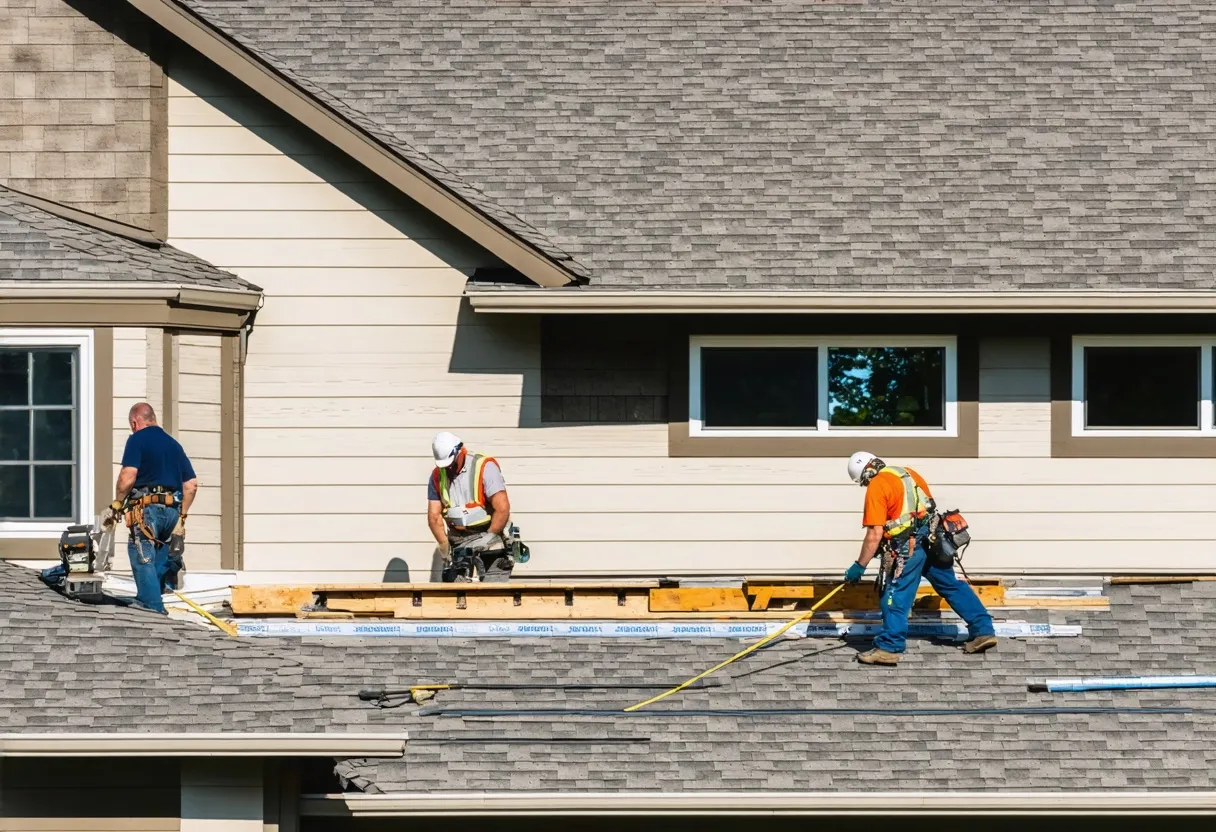
If you're comparing roofing materials in Spokane, you're really weighing three things at once: how the material performs through our specific weather pattern, what it costs installed versus what it costs to maintain, and whether the contractor putting it on your roof is actually credentialed to back up the manufacturer's warranty. That last part gets skipped by a lot of roofing companies. We don't skip it. Every material recommendation on this page comes from a shop that holds GAF Master Elite, Owens Corning Preferred, and Duro-Last certified-installer status, which means the guidance below reflects manufacturer-level training, not just what's easiest to sell.
This page walks through asphalt shingles, metal roofing, TPO membrane, and other single-ply systems, how each holds up in Spokane's freeze-thaw winters and hot, dry summers, and what actually drives the price you'll be quoted. We'll also cover repair, maintenance, emergency service, financing, insurance claims, and the credentials that should factor into who you hire — because material choice and installer quality are the two variables that determine whether a roof lasts 15 years or 40.
Roofing Materials: A Real Comparison for Spokane Conditions
Eastern Washington's climate puts a specific kind of stress on a roof: cold, sometimes snow-loaded winters, sharp freeze-thaw cycling, occasional wind and hail events, and intense UV exposure in the summer months. Materials that work fine in milder or wetter coastal climates don't always hold up the same way here, so the comparison below is filtered through that reality.
Asphalt Shingles vs. Metal Roof
Asphalt shingles remain the most common residential roofing material in the region, and for good reason — they're the lowest upfront cost, they're straightforward to repair in sections, and modern architectural shingles from Owens Corning and GAF are rated for wind speeds well above what a typical Spokane storm produces. The tradeoff is lifespan: a well-installed architectural shingle roof typically runs 20-30 years, and repeated freeze-thaw cycling can accelerate granule loss if the roof isn't ventilated correctly.
Metal roofing costs more upfront — often close to double the installed price of asphalt — but it shheds snow load more effectively, resists wind uplift better, and commonly carries 40-50 year material warranties. For homeowners planning to stay in a property long-term, or anyone who has watched a neighbor deal with ice damming, the math on metal starts to look different. We break down panel types, standing-seam versus exposed-fastener systems, and real cost ranges on our dedicated metal roofing page.
TPO Membrane Roofing and Single-Ply Comparison
For flat or low-slope roofs — additions, porch roofs, and most commercial buildings — asphalt shingles aren't an option, and this is where single-ply membranes come in. TPO (thermoplastic polyolefin) is the most widely installed single-ply system today because it's heat-welded at the seams rather than glued, which gives a more reliable long-term seal, and its reflective white surface helps reduce summer cooling loads.
The other common single-ply options are EPDM (rubber membrane) and PVC. EPDM is durable and inexpensive but relies on adhered or taped seams that can be the weak point over time. PVC performs similarly to TPO with strong chemical resistance, which matters for buildings near grease exhaust or industrial exposure, but it typically costs more. As a Duro-Last certified installer, we most often recommend TPO for Spokane-area flat roofs because it balances upfront cost, seam reliability under freeze-thaw movement, and manufacturer-backed warranty terms. If you're evaluating a commercial or multi-unit property, our commercial roofing services page goes deeper into membrane selection for larger roof systems.
Best Roofing Material for the Spokane Climate
There isn't one universally "best" material — the right answer depends on roof slope, structure, budget, and how long you plan to own the property — but here's the general guidance we give homeowners after inspecting thousands of roofs in this region:
- Steep-slope residential, budget-conscious: architectural asphalt shingles with proper ice-and-water shield at eaves and valleys
- Steep-slope residential, long-term hold: standing-seam metal for superior snow shed and wind resistance
- Flat or low-slope residential additions: TPO membrane for seam reliability and reflectivity
- Commercial and multi-family flat roofs: TPO or PVC single-ply, sized and detailed for the specific drainage layout
- Historic or architecturally distinct homes: metal or premium designer shingles, depending on the roofline
Whatever material you land on, the installation details — proper ventilation, ice-and-water membrane placement, flashing quality, and fastening pattern — matter as much as the material itself. A premium material installed poorly will underperform a mid-tier material installed correctly.
Signs of Roof Damage Worth Acting On
Most roof failures don't happen suddenly — they show early warning signs that get ignored until a leak shows up inside the house. Watch for:
- Granules collecting in gutters or at downspout outlets (a sign of asphalt shingle wear)
- Curling, cracked, or missing shingles, especially after a wind event
- Soft or spongy decking felt when walking the roof
- Daylight visible through the roof deck from inside the attic
- Rust streaking or seam separation on metal or membrane roofs
- Ice damming along the eaves in winter, which forces water back under shingles
- Water stains on interior ceilings or exterior fascia boards
Any one of these is a reason to schedule an inspection before the next storm rather than after.
Roof Repair and Leak Repair
Not every roofing problem calls for a full replacement. Localized leak repair, flashing replacement around chimneys and vents, shingle patching after wind damage, and membrane seam re-welding on flat roofs are all common, cost-effective fixes when the underlying roof structure and decking are still sound. We diagnose the actual source of a leak — which is frequently several feet away from where water shows up inside the ceiling — before recommending a repair path, rather than guessing.
Roof Replacement
When a roof has reached the end of its service life, has widespread storm damage, or repair costs start approaching replacement cost, a full tear-off and replacement is the more economical long-term move. That process includes removing old material down to the deck, inspecting and replacing any damaged sheathing, installing new underlayment and ice-and-water protection, and setting the new material with correct ventilation. Our roof replacement page covers the full scope, timeline, and what to expect during a tear-off in more detail.
Maintenance and Inspections
A roof is a system, not a one-time purchase, and routine maintenance is what separates a roof that hits its full rated lifespan from one that fails early. We recommend a professional inspection at least once a year — ideally in spring, after winter snow load and freeze-thaw cycling have had their chance to cause damage — plus a check after any major wind or hail event. Inspections cover flashing integrity, sealant condition around penetrations, gutter and drainage function, attic ventilation, and granule or membrane wear.
Roof Coatings and Cleaning
For flat and low-slope membrane roofs, protective coatings can extend service life by adding UV protection and sealing minor seam wear before it becomes a leak. On steep-slope roofs, professional cleaning — removing moss, debris, and algae staining — protects shingle granules and prevents moisture from being trapped against the roof surface. Both are lower-cost ways to stretch the useful life of a roof between major work.
Emergency and 24/7 Roofing Service
Storm damage doesn't wait for business hours. When wind tears off shingles or a tree limb punctures a roof deck, water intrusion can cause serious interior damage within hours. We provide emergency tarping and stabilization service to stop active leaks and protect the structure until permanent repairs can be scheduled — because the priority in that moment is limiting damage, not upselling a project.
Warranty Coverage
Material warranties from GAF, Owens Corning, and Duro-Last only mean full value when the installer is certified to offer enhanced coverage terms — which is a direct benefit of working with a credentialed shop rather than a general contractor subcontracting the work out. On top of manufacturer material warranties, we back our installations with a workmanship guarantee, meaning if an installation-related issue shows up, it's covered — not treated as a separate billable visit.
Financing Options
Roof replacement is a significant expense, and we offer financing options so a roof that needs to happen now — after storm damage, or before winter — doesn't have to wait on a full cash payment. During your estimate, we'll walk through available plans alongside the project cost so you can make the decision with full numbers in front of you.
Insurance Claim Coordination: Our Storm-Damage Playbook
Eastern Washington's winter storms and wind events are a leading cause of the roof damage claims we see, and navigating an insurance claim on top of a damaged roof is its own kind of stressful. Here's how we handle it:
- Documented inspection: We photograph and document damage in the level of detail adjusters expect, tying findings to the specific storm event where possible.
- Scope review: We review the adjuster's initial scope against our own inspection findings and flag anything missing before you sign off.
- Direct adjuster communication: We can meet the adjuster on-site to walk the roof together, reducing back-and-forth and lowball scoping.
- Manufacturer-grade repair matching: As certified installers, we replace damaged materials with correct manufacturer specifications, which matters for keeping warranty coverage intact.
- Final walkthrough: Once work is complete, we document the finished roof for your records and the insurer's file.
You're never obligated to use the contractor your insurance company suggests — you have the right to choose who repairs your roof.
Certifications and Credentials
Credentials aren't a marketing badge — they represent actual manufacturer training, factory-backed installation standards, and access to enhanced warranty tiers that uncertified installers simply cannot offer. We hold:
- GAF Master Elite — a certification held by a small percentage of roofing contractors nationally, required for GAF's strongest warranty tiers
- Owens Corning Preferred Contractor status, tied to factory training on their shingle systems
- Duro-Last certified installer status for TPO and single-ply commercial membrane systems
When you're comparing quotes, ask every contractor which manufacturer certifications they hold and confirm it directly with the manufacturer if it matters to your decision — it should.
Request your roof assessment
Tell us about your roof and we'll walk you through materials, cost range, and insurance options if you need them.
More roofing services
Ready to see your options?
Get a clear look at your roof, your material choices, and your cost range — no pressure to decide today.